
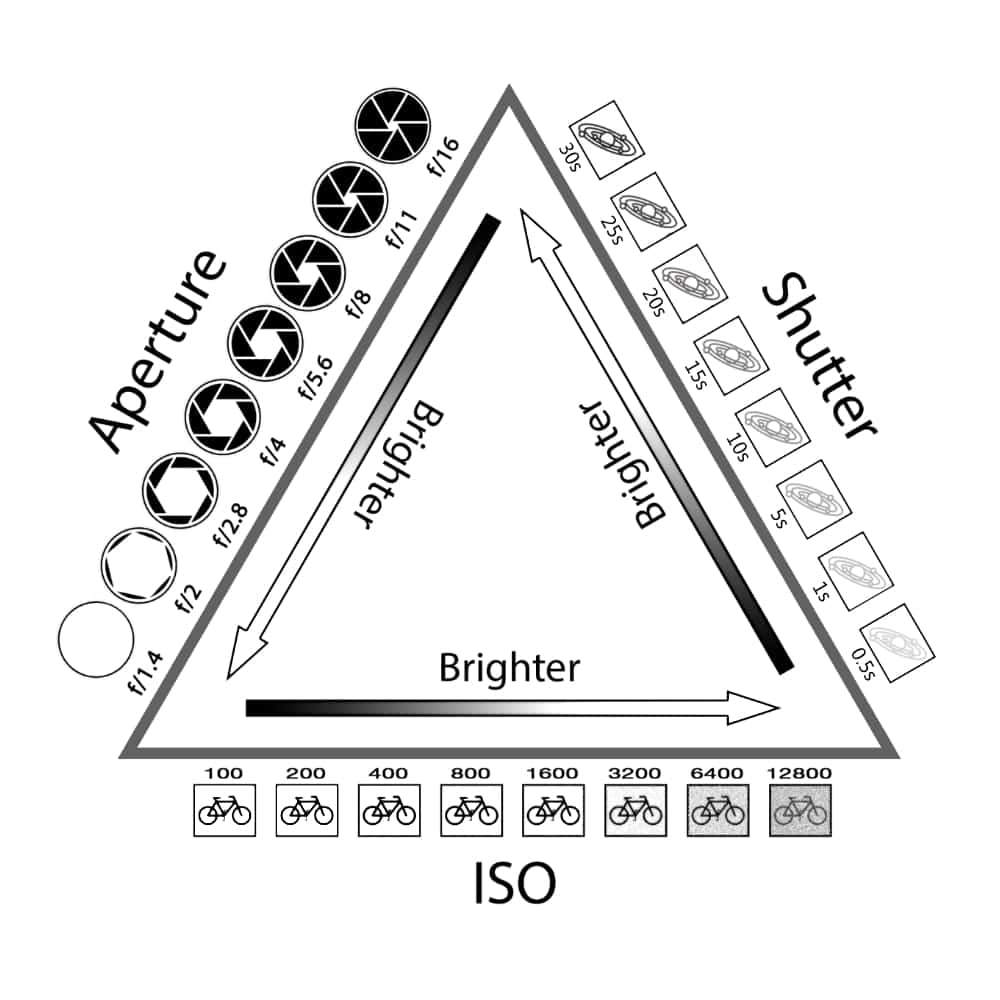
Understanding ISO, aperture, and shutter speed is the foundation of photography. These three settings form what is known as the exposure triangle. Once you understand how they work together, you can control light, motion, and depth in your photos.
If you’re new to camera settings, you may want to read our guide on camera settings for beginners before diving deeper into exposure.
What Is the Exposure Triangle?
The exposure triangle is the relationship between:
- ISO (light sensitivity)
- Aperture (lens opening)
- Shutter Speed (exposure time)
Changing one setting affects the others. The key is finding the right balance.
ISO Explained
ISO controls how sensitive your camera sensor is to light.
- ISO 100–200 → bright conditions
- ISO 400–800 → cloudy or indoor
- ISO 1600+ → low light
Higher ISO allows brighter images but may introduce noise.
Aperture Explained
Aperture is measured in f-numbers (f/1.8, f/2.8, f/8, etc.).
- Wide aperture (f/1.8–f/2.8) → blurry background
- Medium aperture (f/4–f/5.6) → balanced depth
- Narrow aperture (f/8–f/11) → sharp landscape
Aperture affects depth of field and overall sharpness.
Aperture also plays a major role in photography composition and subject separation.
Shutter Speed Explained
Shutter speed controls motion.
- 1/1000s → freeze action
- 1/250s → general photography
- 1/30s → low light (tripod recommended)
Slow shutter speeds can create blur if the camera moves.
How They Work Together
If you increase shutter speed, you may need to:
- Raise ISO
- Or widen aperture
If you narrow aperture, you may need to:
- Slow shutter speed
- Or increase ISO
Photography is about balancing these three settings.
Practical Example
Imagine you’re photographing a person outdoors:
- ISO 100
- Aperture f/2.8
- Shutter 1/500s
If it gets darker, you can:
- Raise ISO to 400
- Or slow shutter slightly
Adjust based on the scene and movement.
Final Tips
- Practice in Manual Mode
- Change one setting at a time
- Review your results
Mastering ISO, aperture, and shutter speed gives you full creative control over your photography.